The Rat Fibronectin ELISA [Fn1] is an advanced immunoassay designed for the precise quantification of fibronectin in various biological samples, including serum, plasma, and tissue lysates. Fibronectin (Fn1) is a glycoprotein that plays a vital role in cell adhesion, migration, wound healing, and tissue repair. Its regulation is critical for normal physiological processes, and its dysregulation has been implicated in pathological conditions such as cancer, fibrosis, and cardiovascular diseases.

Key Features of the Rat Fibronectin ELISA
- High Sensitivity and Specificity: The Rat Fibronectin ELISA kit is optimized for detecting low concentrations of fibronectin, ensuring accurate results.
- Versatile Application: Suitable for a wide range of sample types, including serum, plasma, and tissue homogenates.
- Rapid and Reliable: The protocol is streamlined for quick processing without compromising accuracy.
- Reproducible Results: Each kit undergoes rigorous validation to ensure consistency across experiments.
Biological Significance of Fibronectin
Fibronectin is integral to extracellular matrix (ECM) formation and cell-to-matrix interactions. Its domains facilitate binding to various molecules like collagen, fibrin, and integrins, influencing cellular processes such as differentiation and proliferation. Learn more about the role of fibronectin in ECM dynamics from resources such as the National Library of Medicine and NIH Research Publications.
Fibronectin is also pivotal in:
- Tissue Repair: Regulating the deposition of ECM during wound healing (NCBI Bookshelf).
- Angiogenesis: Supporting blood vessel formation in response to hypoxic conditions (PubMed).
- Cancer Metastasis: Acting as a scaffold for tumor cell migration (Cancer.gov).
Fibronectin in Disease Research
Abnormal fibronectin levels have been linked to various diseases, making the Rat Fibronectin ELISA an essential tool in research. For example:
- Fibrosis: Elevated fibronectin levels are associated with liver and lung fibrosis (NIH Fibrosis Research).
- Cardiovascular Diseases: Fibronectin contributes to atherosclerotic plaque development (CDC Heart Disease Studies).
- Cancer: Altered fibronectin expression is observed in aggressive tumors, correlating with poor prognosis (National Cancer Institute).
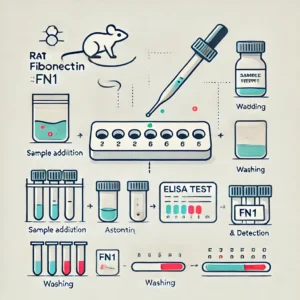
Experimental Workflow of the ELISA Kit
- Sample Preparation: Detailed instructions are available for handling serum, plasma, and tissue samples, ensuring optimal recovery of fibronectin.
- Antigen Binding: Specific antibodies immobilized on the plate capture fibronectin molecules.
- Signal Amplification: Enzyme-linked secondary antibodies enhance the detection signal.
- Quantification: Results are analyzed via spectrophotometry, yielding highly reproducible data.
Access protocols and best practices from resources like the FDA Research Database and CDC Laboratory Training.
Applications of the Rat Fibronectin ELISA

Conclusion
The Rat Fibronectin ELISA [Fn1] is an indispensable tool for researchers studying fibronectin’s biological roles and implications in disease. Its precision, sensitivity, and versatility make it ideal for diverse research needs.
For further reading, explore detailed studies and protocols on educational and government platforms such as:
By leveraging this assay, researchers can advance our understanding of fibronectin-related mechanisms and their therapeutic potential.